
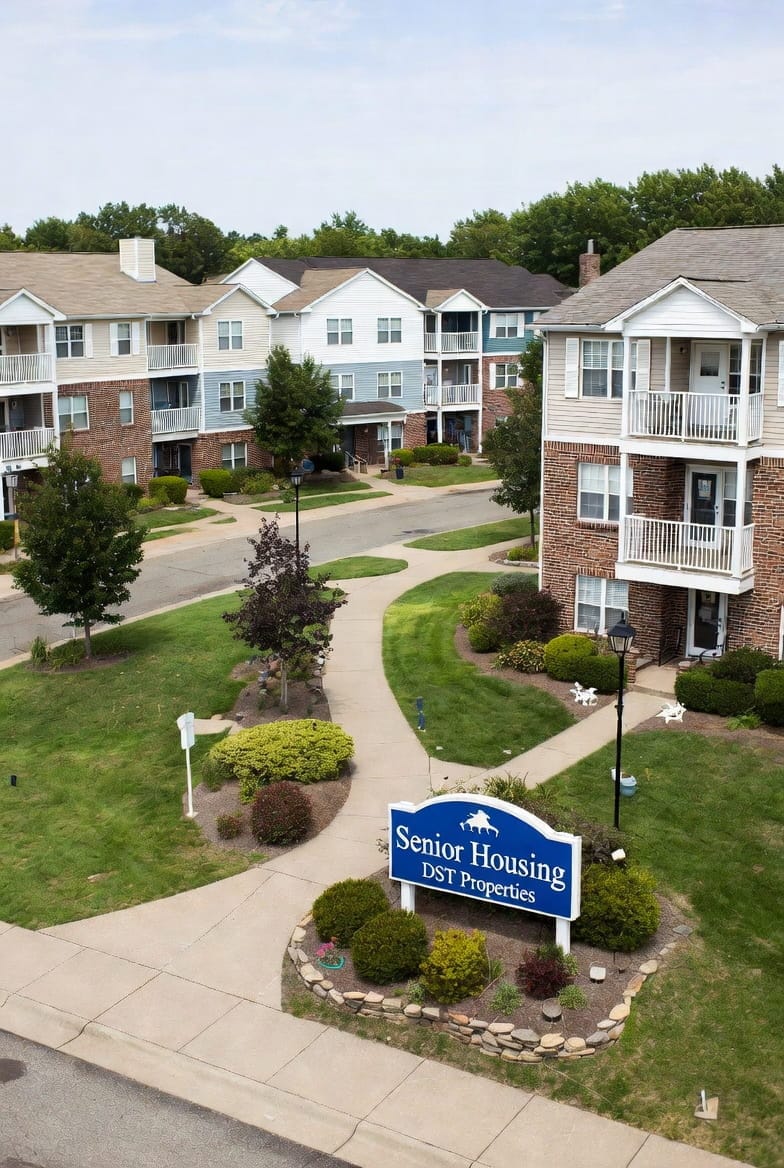
Top Reasons to Choose 1031 Specialist for Senior Housing DST Properties
Top Reasons to Choose 1031 Specialist for Senior Housing DST Properties
Senior housing DST investors often face supply shortages, complex care regulations, and management inefficiencies that impact occupancy and returns. 1031 Specialist addresses these with carefully selected facilities in high-demand areas.
2026 Senior Housing DST Market: Massive Demographic Tailwinds Create Exceptional 1031 Opportunities
The oldest Baby Boomers turn 80 in 2026, driving the largest wave of senior-housing demand in U.S. history. National occupancy is climbing toward 90%+ (highest in 20 years), new construction completions are down 73% since 2021, and absorption continues to outpace supply in most markets. This combination delivers resilient occupancy, stable 4%+ rent growth, and strong pricing power – all while fully qualifying as like-kind replacement property under IRS Revenue Ruling 2004-86.
At 1031 Specialist, accredited investors with exchanges starting at $100,000 gain exclusive access to our carefully curated senior housing DST inventory – pre-vetted for high-demand locations, experienced operators, low-leverage structures, transparent fees, and seamless 45/180-day timeline compliance. Here are the top reasons accredited investors choose 1031 Specialist for senior housing DST properties in 2026.
1. Demographic-Driven Selection — Targeting Regions with Booming 80+ Populations
We prioritize DSTs in Sunbelt and Midwest metros where the 80+ population is growing fastest and new supply is most constrained. This strategic focus capitalizes on powerful supply-demand imbalances, delivering occupancy rates consistently above 92% and protecting your investment against regional downturns. Every listing includes detailed demographic mapping and 5-year population forecasts so you can see exactly why these properties are built for long-term stability.
2. Specialized Management Partners — Experienced Operators for Assisted and Independent Living
Senior housing requires operators who understand complex care regulations, staffing ratios, and resident acuity. We partner only with experienced, institutional-grade managers who have successfully navigated reimbursement changes and labor challenges for 10+ years. Their expertise reduces regulatory risk and maintains high care quality — directly translating into stable occupancy and predictable monthly distributions for DST investors.
3. Cost-Effective Structures — Minimized Fees and Economies of Scale
Many senior-housing DSTs carry 12–20% upfront loads that erode returns in this operationally intensive sector. Our marketplace emphasizes programs with total front-end fees in the 2–6% range, negotiated through sponsor relationships and bulk purchasing power. More of your 1031 proceeds go directly into income-producing assets, accelerating cash-on-cash returns and shortening your breakeven period.
4. Long-Term Lease Stability — Extended Resident Stays That Counter Vacancy Risk
Unlike multifamily with high turnover, senior residents typically stay 2–4 years or longer. We focus on DSTs with proven extended-stay models, strong referral networks from hospitals and physicians, and high resident satisfaction scores. This built-in stability delivers far more predictable cash flow than shorter-term housing — a critical advantage inside tight 1031 timelines.
5. Inflation-Protected Income — Adjustable Fee Structures That Hedge Rising Healthcare Costs
Senior housing operators can adjust monthly fees annually to keep pace with inflation and rising care costs. Our selected DSTs feature transparent, market-based escalation clauses that have historically delivered 3–5% annual income growth. In an inflationary environment, this structure protects and grows your distributions while preserving full capital-gains deferral.
6. Diversified Care Levels — Blending Independent and Assisted Living to Spread Risk
Pure independent-living or memory-care assets can be more volatile. We prioritize mixed-care DSTs that combine independent living, assisted living, and memory-care wings within the same community. This diversification buffers against shifts in senior preferences or acuity levels while still qualifying as a single like-kind replacement property for your 1031 exchange.
7. Exit and Liquidity Planning — Guidance on Rollovers and Market-Timed Sales
DSTs are designed for long-term holds, but we provide clear, documented exit strategies including 721 UPREIT conversions into publicly traded senior-housing REITs, coordinated portfolio sales, or secondary-market liquidity options. Our team helps you plan exits timed to market peaks, easing traditional illiquidity concerns and giving you control over when to redeploy capital into the next 1031 opportunity.
Why Senior Housing DSTs Are Especially Powerful for 1031 Exchanges in 2026
With historic demographic demand colliding with record-low new supply, senior housing DSTs offer the ideal mix of immediate tax deferral, passive monthly income, inflation protection, and appreciation potential. Minimum investments as low as $100,000 open the door to institutional-quality communities you could never purchase outright – all while maintaining full IRS compliance and zero day-to-day management.
1031 Specialist vs. Other Senior Housing DST Providers
Ready to Secure Stability with a Senior Housing DST in 2026?
If you’re an accredited investor with a deal over $100,000 and want resilient, demographic-backed cash flow in one of the strongest real-estate sectors of the decade, 1031 Specialist delivers the safest and most efficient path. Apply for access to the 1031 Specialist online marketplace at https://1031specialist.com/register.
Register to view current DST and 1031-eligible replacement offerings.
Minimum investment is $100,000. In-house QI included.
Educational only — not tax, legal, or investment advice. Some replacement interests are securities offered only through official documents to investors who meet accreditation and suitability standards. Content ported from the live Resources hub.